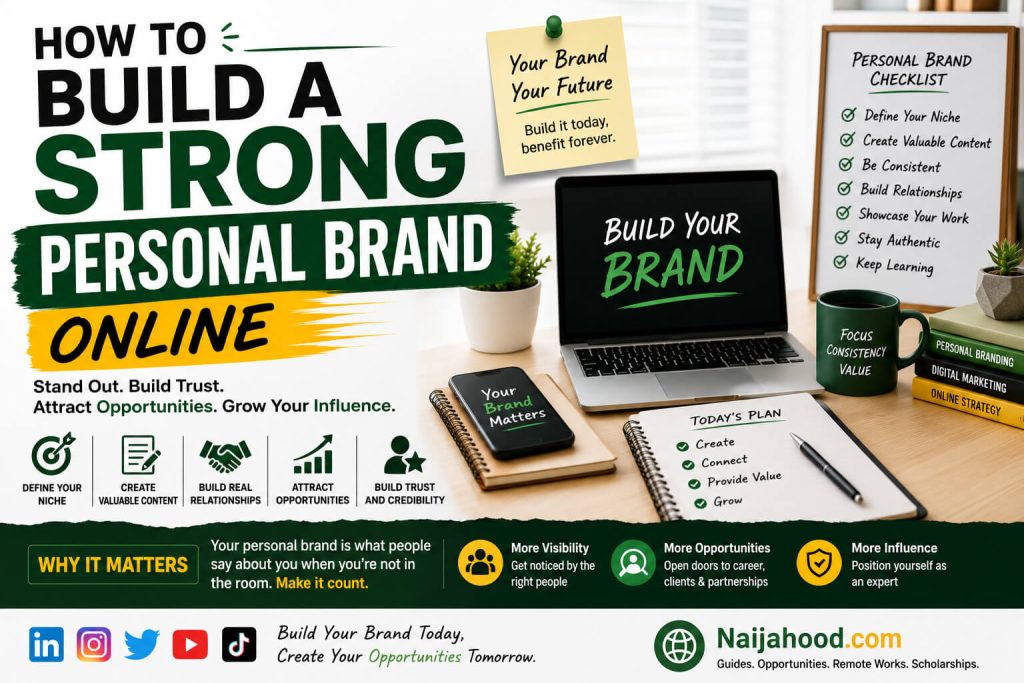
How To Build a Strong Personal Brand Online
Have you ever searched for someone’s name on Google before doing business with them or before accepting their friend request on LinkedIn? Most people have. It has become a normal part of how we make decisions today. Before hiring a freelancer, offering someone a job, inviting them to speak at an event, or even buying from an online business, many people take a few minutes to check who that person is and what they are known for.
That simple habit is one of the reasons personal branding has become so important. Whether you are a student looking for scholarships, a graduate searching for a job, a freelancer trying to attract clients, or an entrepreneur growing a business, your online presence often speaks before you do. The content you share, the way you communicate, and the value you provide all contribute to the reputation people build about you long before they ever meet you.
Many people believe personal branding is only for celebrities, influencers, or people with hundreds of thousands of followers. That is one of the biggest misconceptions. A strong personal brand has very little to do with fame. It is about becoming known for something valuable and making it easy for people to trust you. There are professionals in Nigeria with fewer than five thousand followers who receive consulting jobs, speaking invitations, and business opportunities regularly because they have built credibility in their field. At the same time, there are accounts with hundreds of thousands of followers that struggle to convert attention into meaningful opportunities because people still do not know what they truly represent.
The good news is that building a personal brand is not complicated. It does not require expensive cameras, a professional studio, or a huge advertising budget. It begins with understanding who you are, what you want to be known for, and consistently sharing value with the people you want to reach. In this guide, you will learn practical steps that can help you build a personal brand that earns trust, attracts opportunities, and continues to grow over time.
1. Decide What You Want People to Remember You For
One of the biggest reasons many people struggle to build a strong personal brand is because they try to be everything at once. Today they are posting business advice. Tomorrow they become fitness experts. The next week they are talking about cryptocurrency before suddenly switching to travel content. There is nothing wrong with having different interests, but constantly changing your focus makes it difficult for people to understand what you actually do.
Take a moment to ask yourself one important question.
If someone mentions my name in a conversation, what do I want them to immediately associate me with?
Maybe you want to become known as a software developer who explains technology in simple terms. Perhaps you want people to recognize you as a scholarship expert, a digital marketer, a fashion entrepreneur, or a financial educator. Whatever you choose, make sure it reflects both your knowledge and your long-term goals.
Many successful personal brands are built around one clear message. Once people know what you stand for, they begin recommending you whenever opportunities in that area appear.

2. Create Professional Profiles Across Your Online Platforms
Your social media accounts are often the first place people go when they want to know more about you. That means your profiles should immediately communicate who you are and what you do.
Use a clear and professional profile picture where people can see your face. Write a simple bio that explains your expertise instead of using vague descriptions. If you have a website, portfolio, or LinkedIn profile, include the link so visitors can easily learn more about your work.
Consistency also matters. Using the same name, profile picture, and general message across your major platforms helps people recognize you quickly. Imagine someone discovering your work on Facebook and then searching for you on LinkedIn. They should immediately know they have found the right person.
This may seem like a small detail, but first impressions online often influence whether someone decides to follow you, contact you, or move on to someone else.

3. Share Content That Helps People
One of the fastest ways to build credibility is by sharing useful information consistently. People follow accounts that teach them something, solve their problems, or help them improve their lives.
If you are a web developer, explain common website mistakes that businesses should avoid. If you are a photographer, share simple photography tips. If you work in finance, break down complex money topics into language that anyone can understand.
You do not need to post every day. What matters more is providing value whenever you do post.
Think about the creators you enjoy following. Chances are you return to their pages because you usually learn something useful. That is exactly how trust is built.

4. Let People Get to Know the Person Behind the Brand
People connect with personalities more easily than logos. While your expertise is important, your story also matters.
You do not have to share every detail about your personal life, but allowing people to see parts of your journey makes your content feel more authentic. Talk about lessons you learned while building your business. Share mistakes that taught you valuable experiences. Celebrate milestones, no matter how small they seem.
For example, someone looking at Naijahood today may see a growing platform, but they may never know how much work went into publishing consistent content, researching opportunities, and building trust with readers. Stories like these help people appreciate the journey instead of only seeing the results.
One interesting thing about social media is that people often remember honest stories much longer than perfectly designed graphics.
5. Build Relationships Instead of Just Collecting Followers
Many people measure success online by follower count alone. While growing your audience is important, meaningful relationships are even more valuable.
Reply to comments thoughtfully. Answer direct messages when possible. Support other creators in your industry by engaging with their content genuinely instead of expecting attention only for your own posts.
Networking online works very much like networking offline. People remember those who contribute positively to conversations and consistently offer value.
You might be surprised how many business partnerships, freelance projects, and job opportunities begin with a simple conversation in the comment section.
6. Showcase Your Skills Instead of Simply Talking About Them
Many talented people miss opportunities because they keep telling people what they can do without ever showing evidence.
If you are a graphic designer, post your designs. If you write articles, share your best work. If you build websites, create a portfolio. If you edit videos, upload samples of your projects.
Your work becomes proof of your ability.
People trust what they can see far more than what they are simply told.
Instead of saying you are good at something, demonstrate it consistently.
7. Continue Learning and Improving
The internet changes quickly. New platforms appear, algorithms change, and audience preferences evolve. People who continue learning usually remain relevant for much longer.
Read books related to your industry. Take online courses. Watch interviews with experienced professionals. Learn from successful creators, but avoid copying them completely.
Every new skill you develop makes your personal brand stronger because it increases the value you can offer to other people.
One thing you will notice is that respected professionals rarely stop learning. They understand that growth is part of staying relevant.
8. Protect Your Reputation Online
A strong personal brand can take years to build, but it can be damaged surprisingly quickly.
Think carefully before posting anything online. Avoid unnecessary arguments that do not add value. Treat people respectfully, even when you disagree with them.
Potential employers, clients, investors, and collaborators often look beyond your qualifications. They also observe how you interact with others and handle different situations.
Professionalism is not only about what you know. It is also about how you behave.
9. Stay Consistent Even When Growth Feels Slow
One mistake many people make is giving up too early. They post for a few weeks, receive little engagement, and conclude that personal branding does not work.
The truth is that many opportunities happen quietly.
Someone may follow your content for six months without ever liking a post. Then one day they contact you with a business proposal because they have been observing your work consistently.
Growth online is rarely instant. It usually rewards people who continue showing up even when progress feels slow.
Consistency creates familiarity, and familiarity builds trust.
10. Focus on Building Trust Rather Than Chasing Popularity
Popularity comes and goes, but trust lasts much longer.
Instead of trying to go viral every week, concentrate on becoming someone whose advice people genuinely respect. Share accurate information, admit when you do not know something, and always look for ways to help your audience.
Over time, people will begin recommending you to others because they trust your knowledge and your character.
That recommendation is often far more valuable than thousands of random followers.
Common Mistakes That Hurt Personal Branding
Even talented people can weaken their personal brand through avoidable mistakes. Some of the most common include trying to appeal to everyone instead of focusing on a specific audience, posting inconsistently, copying other creators instead of developing their own voice, ignoring comments and messages, sharing low-quality content, and abandoning their online presence whenever growth slows down.
Another mistake many people make is pretending to know everything. Audiences appreciate honesty. It is perfectly acceptable to admit you are still learning. In fact, people often connect more with authenticity than perfection.
Tips for Building a Strong Personal Brand
- Decide what you want to be known for and stay focused.
- Keep your online profiles professional and up to date.
- Share valuable content consistently.
- Showcase your skills through real work.
- Build genuine relationships instead of chasing followers.
- Continue learning and improving your expertise.
- Protect your online reputation.
- Stay consistent even when results take time.
Final Thoughts
Building a strong personal brand online is one of the smartest investments you can make in your career or business. Every helpful article you publish, every valuable post you share, and every meaningful conversation you have contributes to the reputation people build about you. That reputation can eventually lead to job offers, business partnerships, speaking engagements, freelance clients, and opportunities you never expected.
You do not need to become an internet celebrity to build a successful personal brand. What you need is clarity, consistency, and a genuine desire to provide value. Focus on helping people, keep improving your skills, and allow your work to speak for itself. Over time, your name will become associated with the expertise and value you consistently deliver, and that is what a strong personal brand is truly about.
Read More Career Tips
How To Create Viral Content Consistently and Grow Your Audience Faster
How To Get Customers and Make Consistent Sales No Matter What You Sell
15 High Income Skills That Can Change Your Financial Future in 2026
Explore More Opportunities on Naijahood