
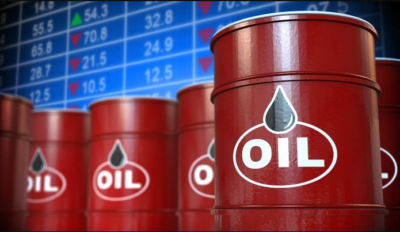
Global oil prices fell more than 5% on Tuesday June 24 after Israel announced its acceptance of a ceasefire proposal from U.S. President Donald Trump potentially ending nearly two weeks of escalating conflict with Iran.
The decline in crude oil prices came as investor concerns about prolonged disruptions in the energy market began to ease. The conflict had raised fears of supply interruptions particularly through the Strait of Hormuz a key route for global oil transport.
By 06:50 GMT Brent crude was down 5.2% trading at $67.75 per barrel while U.S. benchmark West Texas Intermediate (WTI) fell 5.4% to $65.01 per barrel.
The potential end to the conflict has been welcomed by market participants said Lee Hardman a currency analyst at MUFG. Brent has nearly reversed all the gains made since the conflict began.
The easing tensions also affected currency markets with the U.S. dollar slipping after a period of strength driven by geopolitical risks. Hardman noted If Middle East tensions fade we’re likely to see the dollar weaken further.
On Monday oil prices had briefly surged due to fears that Iran might retaliate against a U.S. strike on its nuclear facilities by disrupting traffic in the Strait of Hormuz. However prices dropped by up to 7% later in the day when Iran’s response a missile strike on a U.S. base in Qatar did not damage oil infrastructure.
Tehran played it cool said Stephen Innes, managing partner at SPI Asset Management. Their retaliation was significant enough for headlines but not enough to disrupt the oil market. Once that became clear the war premium on crude prices diminished.
In a formal statement the Israeli government claimed it had achieved all objectives of its military operation stating it had eliminated an immediate dual existential threat nuclear and ballistic. They warned that any future violations of the ceasefire would be met with force.
The de-escalation positively impacted global equity markets with major Asian indexes closing higher. Tokyo gained 1.1% Shanghai rose 1.2% and Hong Kong increased by 2.1%. Seoul surged 3.0% Taipei added 2.1% and Sydney climbed 1.0%. Virgin Australia saw a significant rise after its recent recovery from near-collapse.
European markets also opened higher, with London’s FTSE 100 up 0.7%, although gains were limited by falling energy stocks like Shell and BP Paris rose 1.5% and Frankfurt jumped 1.8%.
In forex trading the dollar weakened slightly after U.S. Federal Reserve Governor Michelle Bowman expressed support for interest rate cuts if inflation remains steady. Her comments fueled speculation that the Fed might resume rate cuts by September.
Wan Li a strategist at HSBC noted that Bowman’s remarks contributed to a weaker dollar outlook Ongoing progress in tariff negotiations is creating a less risky economic environment for policy adjustments.
Market Snapshot as of 07:00 GMT:
Brent Crude: $67.75 per barrel (↓ 5.2%)
WTI Crude: $65.01 per barrel (↓ 5.4%)
Euro/Dollar: $1.1609 (↑)
Pound/Dollar: $1.3586 (↑)
Dollar/Yen: 145.05 yen (↓)
Tokyo – Nikkei 225: 38,790.56 (↑ 1.1%)
Hong Kong – Hang Seng: 24,181.94 (↑ 2.1%)
Shanghai – Composite: 3,420.57 (↑ 1.2%)
London – FTSE 100: 8,816.78 (↑ 0.7%)
New York – Dow Jones: 42,581.78 (↑ 0.9%)